Why Are Stone Temples of India So Special? 2026 Guide
Last Updated on Aug 4th, 2026 by Neha Sharma, Leave a Comment
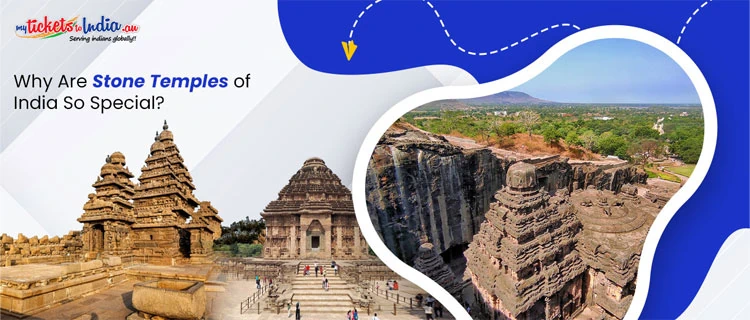
Some of the most FAMOUS stone temples in the world where extraordinary talent & faith coexist are found in India. These temples which are made from large blocks of stone or individual rocks are works of art that showcase the skill of ancient Indian craftspeople rather than just being buildings.
Numerous of these temples which were constructed centuries ago & remain intact are exceptional representations of both architectural style & cultural legacy. Every stone from the GREAT Pancha Rathas in Mahabalipuram to the imposing Kailasa Temple at Ellora narrates a tale of devotion, artistry & timeless beauty.
This blog explores the history, special characteristics & reasons why tourists continue to be in awe of India’s most magnificent stone temples.
Kailasa Temple, Ellora
History – An appealing example of ancient Indian rock-cut architecture is the Kailasa Temple in Ellora, Maharashtra. This was constructed in the 8th century CE under the reign of Rashtrakuta King Krishna I. It is the world’s largest building. One volcanic rock was used to carve the temple’s top & an engineering achievement that is still impressive today.
Mount Kailasa the famed home of Lord Shiva is featured in its design. An estimated 200,000 tons of rock had to be removed in order to create the temple complex’s elaborate sculptures, massive pillars & intricate carvings. This masterpiece demonstrates the Rashtrakuta dynasty’s devotion, artistic talent & architectural mastery.
Architecture & Features –
- Carving – Over 200,000 tons of stone were removed using rough tools.
- Structure – Two-story freestanding structure with a Nandi pavilion, gopuram, shrines & a man dapa.
- Design – intricate animal sculptures, elaborate epic scenes from the Mahabharata & Ramayana & Dravidian architectural elements.
Facts –
- A UNESCO World Heritage Site is the Ellora Caves.
- Continued multiple attacks, including Aurangzeb’s
- Displays the artistry & engineering skill of Indian rock-cutting.
Shore Temple, Mahabalipuram
History – The Shore Temple in Mahabalipuram, Tamil Nadu is among the oldest structural stone temples in South India. Built during the Pallava dynasty in the seventh century CE it marks a dramatic shift from rock-cut architecture to free-standing stone temples.
This impressive UNESCO World Heritage Site is situated on the shores of the Bay of Bengal. The temple complex is made up of shrines to Lord Shiva & Lord Vishnu that are beautifully decorated in Pallava. Its graceful design, intricate carvings & magnificent towers highlight the early Dravidian architectural style.
As a reminder of the maritime grandeur of the past the temple has endured cyclones & strong coastal winds over the years.
Architecture & Features –
- Design – Traditional Dravidian architecture, featuring elegant designs & pyramidal towers.
- Complex – consists of three temples, one for Vishnu and two for Shiva.
- Setting – Built with sandstone it is resistant to the weather conditions along the coast.
Facts –
- UNESCO World Heritage Site.
- One of India’s most photographed monuments.
- Features reliefs depicting mythological scenes, deities & sacred animals.
Konark Sun Temple, Odisha
History – An enormous example of Indian temple architecture is the Konark Sun Temple in Odisha. This temple was constructed by King Narasimhadeva I of the Eastern Ganga dynasty in the 13th century CE it was devoted to the Sun God Surya.
The temple’s distinctive design takes the form of a massive stone chariot complete with seven magnificent horses & twelve finely carved wheels. It once had a huge sanctum with a towering atop but sadly it fell over time.
Reflecting the pinnacle of Kalinga architecture the temple’s walls are covered in beautiful sculptures that portray gods, dancers, animals & scenes from daily life. This UNESCO World Heritage Site is now a representation of spiritual grandeur & artistic genius.
Architecture & Features –
- Structure – The chariot is pulled by seven stone horses & twenty-four finely carved stone wheels.
- Material – Massive blocks & intricate carvings are made from khondalite stone.
- Art – scenes from everyday life, mythological characters & celestial beings adorn the walls.
Facts –
- UNESCO World Heritage Site.
- Wheels serve as sundials.
- An architectural wonder with astronomical significance from the Kalingas.
Brihadeeswara Temple, Thanjavur
History – One of the finest examples of Chola architecture is the Brihadeeswara Temple popularly referred to as the “Big Temple.” The Chola emperor Raja Raja Chola I assigned it & it was finished in Thanjavur, Tamil Nadu in 1010 CE.
At approximately 66 meters the Vimana or temple tower is one of the tallest in the world & is the focal point of this magnificent temple devoted to Lord Shiva. An engineering marvel of its era, the temple’s massive granite structure was constructed without the aid of contemporary technology.
Beautiful sculptures & paints that depict Chola art & culture adorn its walls & hallways. A UNESCO World Heritage Site it continues to stand as a testament to the architectural skill & religious fervor of the Chola dynasty.
Architecture & Features –
- Vimana – The main tower is 66 meters high & it is topped by a single granite block that weighs close to 80 tons.
- Complex – A massive granite building featuring great gopuras & Nandi statues.
- Art – Inside are amazing mural paintings & centuries old stucco figures.
Facts –
- A UNESCO World Heritage Site is the Great Living Chola Temples.
- It has complex festivals & traditions.
- A Chola dynasty engineering and artistic masterpiece.
Kandariya Mahadev Temple, Khajuraho
History – The largest & most elaborate temple in the Khajuraho Group of Monuments is the Kandariya Mahadev Temple in Khajuraho Madhya Pradesh. It was constructed by the Chandela dynasty in the eleventh century CE & is devoted to Lord Shiva.
The temple is known for its magnificent shikhara or spire which rises to a height of roughly 31 meters & symbolizes Mount Meru the cosmic mountain. More than 800 finely carved sculptures that depict musicians, celestial beings, religious figures & everyday scenes adorn its walls.
The temple’s design which blends flawless symmetry & fine detail is in keeping with the Nagara architectural style. Its ongoing designation as a UNESCO World Heritage Site represents the height of Chandela culture.
Architecture & Features –
- Design – Smaller spires that represent Mount Meru surround the central spire, which is around thirty meters high.
- Sculpture – More than 800 finely carved stone figures that symbolize everyday life, gods & celestial nymphs.
- Design – Nagara style, featuring a sanctum with a Shiva lingam & an elaborate entrance doorway.
Facts –
- A UNESCO World Heritage Site is the Khajuraho Group of Monuments.
- Known for its spiritual carvings.
- An emblem of medieval Indian religious art.
Ranakpur Jain Temple, Rajasthan
Historical Context – The Ranakpur Jain Temple in Rajasthan is among the largest & most significant Jain temples in India. Built in the 15th century CE under Rana Kumbha’s patronage it is dedicated to Adinatha the first Jain Tirthankara. Constructed entirely of glowing white marble the temple is a marvel of Maru Gurjara architecture.
Its amazing 1,444 exquisitely carved pillars, each one distinct, showcase the craftsmanship of the era. The temple’s design includes a number of symmetrically placed domes, halls & shrines. Today, it attracts tourists from all over the world as a masterpiece of Jain devotion & artistry.
Architecture & Features –
- Pillars – There are 1,444 marble pillars & each is uniquely carved.
- Design – Large halls, domes & intricate stone filigree work are all part of the design.
- Iconography – Jain Tirthankaras depicted throughout.
Facts –
- Represents the austerity & purity of the Jain philosophy.
- Showing off the pinnacle of marble artistry no two pillars are alike.
Quick Reference Table of Iconic Stone Temples!
| Temple | Location | Century | Stone Type | Height | UNESCO Status |
| Kailasa, Ellora | Maharashtra | 8th | Basalt | 32m | Yes |
| Shore, Mahabalipuram | Tamil Nadu | 7th | Sandstone | ~18m | Yes |
| Konark Sun | Odisha | 13th | Khondalite | ~30m | Yes |
| Brihadeeswara, Thanjavur | Tamil Nadu | 11th | Granite | 66m | Yes |
| Kandariya Mahadev | Khajuraho, MP | 11th | Sandstone | 30m | Yes |
| Ranakpur Jain | Rajasthan | 15th | Marble | 24m | No (yet) |
Eager to visit all these Temples in India Plan your trip from Australia to India and experience the magic of these Temples!
Conclusion
India’s stone temples are works of faith & craftsmanship each with unique historical, artistic & structural significance. Every site listed above is a living testament to the nation’s spiritual diversity & engineering prowess not just a place of worship.
Frequently Asked Questions
Q: What are the top 10 famous temples in India?
A: There are many temples in India, but some are notable for their spiritual significance & architectural design.
Kani Vishwanath Temple, Kedarnath Temple, Badrinath Temple, Somnath Temple, Jagannath Temple, Brihadeeswara Temple, Kailasa Temple, Konark Sun Temple, Meenakshi Amman Temple & Ramanathaswamy Temple are among the top ten well-known temples in India.
These well-known Indian temples are famous for their cultural legacy, spiritual significance & historic architecture.
Q: What are the 4 main temples in India?
A: Badrinath (Uttarakhand), Dwarka (Gujarat), Jagannath Puri (Odisha), and Rameswaram (Tamil Nadu) are the four principal Char Dham temples.
These temples are part of the revered Char Dham Yatra & are regarded as the most significant Hindu pilgrimage sites in India.
Q: Which is the world’s No. 1 temple in India?
A: Many people believe that the Akshardham Temple in Delhi is the biggest & most exquisite contemporary Hindu temple in India. Though, the Brihadeeswara Temple & Kailasa Temple rank among India’s most famous stone temples in terms of historical significance.
Q: Which is India’s oldest temple?
A: The oldest temple in India is thought to be the Mundeshwari Temple in Bihar which was built in the second or third century CE & is devoted to Lord Shiva & Shakti. It marks the start of India’s ancient temple architecture.
Q: What are the most ancient temples in India?
A: Mundeshwari Temple in Bihar, Shore Temple in Mahabalipuram, Tamil Nadu, Kailasa Temple in Ellora, Maharashtra, Lingaraja Temple in Odisha & Meenakshi Temple in Tamil Nadu are a few of India’s oldest temples.
These ancient Indian temples demonstrate the development of early centuries’ stone temples & rock-cut architecture.
Q: What is the largest temple in India?
A: In terms of area Sri Ranganathaswamy Temple in Srirangam, Tamil Nadu is the biggest temple in India. With 21 grand gopurams & 156 acres of land it is one of South India’s most popular pilgrimage destinations.
Q: Which temple in India is carved out of a mountain?
A: The Kailasa Temple at Ellora in Maharashtra is the most famous temple carved out of a mountain. It is a monolithic rock cut structure carved from a single piece of stone representing a marvel of ancient Indian architecture.
Q: What is the most beautiful temple in India?
A: With its elaborate carvings & lively gopurams, the Meenakshi Amman Temple in Madurai, Tamil Nadu is regarded as one of the most exquisite temples in India. Golden Temple (Amritsar) & Akshardham Temple (Delhi) are two other noteworthy examples.
Q: Which city is known as the Temple City of India?
A: Because of its thousands of historic temples, including the famous Lingaraja Temple, Bhubaneswar the capital of Odisha is known as the Temple City of India.
Q: What is the significance of rock-cut temples in India?
A: India’s earliest examples of Hindu architecture are rock-cut temples. The Shore Temple in Mahabalipuram, the Ajanta Caves & Ellora Caves are famous examples that illustrate the shift from cave architecture to structural stone temples.
Q: Which are the iconic stone temples of India?
A: Kailasa Temple, Ellora, Brihadeeswara Temple, Thanjavur, Shore Temple, Mahabalipuram, Konark Sun Temple, Odisha, Kandariya Mahadev Temple & Khajuraho are a few of India’s most famous stone temples.
All brand names and trademarks mentioned are the property of their respective owners and are used for educational purposes only. We do not promote, endorse, or criticise any brands. Their use is solely for reference and informational context.

About Neha | View Posts
Neha Sharma, a passionate travel blogger, captures the beauty of the world through her words. With her adventurous spirit and a keen eye for detail, Neha takes her readers on mesmerizing journeys to exotic destinations. Her vivid descriptions and insightful tips make her the go-to guide for wanderlust seekers. Join Neha as she explores the globe, sharing her love for travel and inspiring others to go on their unforgettable adventures.
Latest Blog
-
Sydney Airport Complete Guide 2026: Terminals, Transport, & Flights To India
Updated on 27 Aug 2026 -
Can You Bring an E-Cigarette on a Plane? Australian 2026 Travel Rules
Updated on 18 Aug 2026 -
How To Choose The Best Travel Agency For Australia To India Flights in 2026
Updated on 07 Aug 2026 -
Melbourne Airport Map 2026: Terminals, Gates & Facilities
Updated on 03 Aug 2026 -
Virgin Australia Lounge 2026 Guide for Australia to India Travelers
Updated on 04 Sep 2026

Discuss this post ?